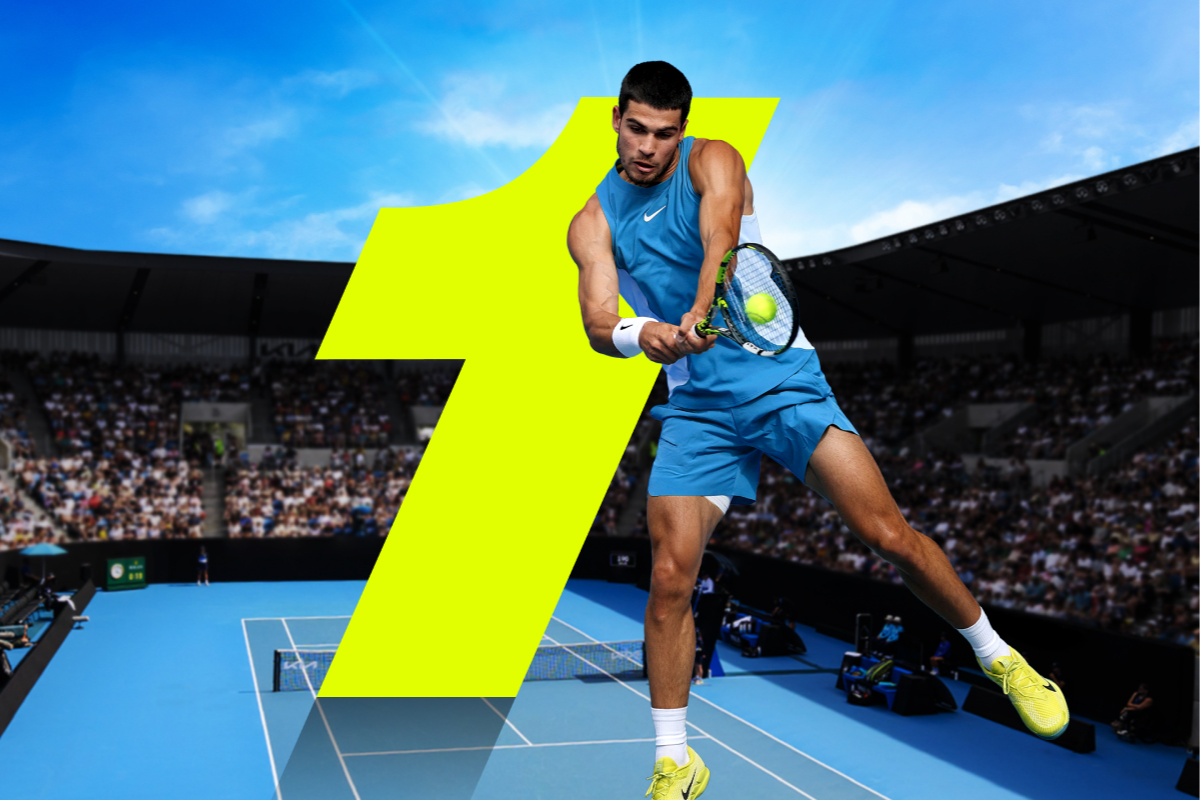
The 2026 Australian Open kicked off with a format that felt more like a high-stakes game show than a traditional tournament. The One Point Slam stripped away the sets and the games, leaving players with just one chance to win it all. It was a high-stakes tennis exhibition where a single unforced error from a superstar could result in a $1,000,000 payday for a local amateur. The atmosphere at Rod Laver Arena was pure electricity as fans realized that the usual rules of tennis hierarchy were being rewritten in real-time.
For the stars, it was a nightmare of nerves. For the fans, it was the ultimate quick-read spectacle. This event proved that you don’t need five hours to create a legend; you just need ten seconds and a whole lot of pressure. As the brackets narrowed, it became clear that the gap between the world’s best and a determined coach was much smaller than anyone expected, leading to the most unpredictable night in Melbourne Park history.
The Man Who Broke the Elite Bracket
Before the tournament, Jordan Smith was a name known mostly at the Castle Hill Tennis Academy in Sydney. By the end of the night, he was a millionaire. Smith, a former ATP hopeful who now coaches for a living, brought a “brick wall” defensive style that proved impossible for the pros to crack in a single-point scenario. He didn’t need to hit the fastest serve of the night; he just had to be the one who didn’t blink when the lights were brightest.
Smith’s success was built on a foundation of tactical discipline and the “Amateur Advantage.” While the professionals were limited to a single serve, amateurs like Smith were allowed two attempts, providing a massive psychological safety net. The table below highlights the key differences that paved his way to the $1 million prize:
| Highlight Metric | Jordan Smith (Amateur) | The Pro Field (Elite) |
|---|---|---|
| Serve Allowance | 2 Attempts (Safety Net) | 1 Attempt (Maximum Risk) |
| Winning Strategy | High-depth defensive play | Aggressive winner-seeking |
| Biggest Scalp | Jannik Sinner (World No. 2) | N/A (Most were eliminated) |
| Financial Stakes | Life-changing $1M payout | Reputation & $1M prize |
| Crowd Vibe | Local Sydney Underdog | Global Superstar Pressure |
The Giant-Slayer: When the World No. 2 Faltered

The most shocking moment of the night—and perhaps the year—was seeing Jannik Sinner crumble under the weight of a single point. Sinner, the reigning Australian Open champion, stepped up to serve against Smith in the third round. Restricted by the one-serve rule, the Italian superstar felt the pressure of the 15,000-strong crowd. When his serve clipped the net and landed wide, a stunned silence fell over the arena before the fans erupted.
It wasn’t just Sinner who felt the heat. The night was a graveyard for the Top 10, as the “sudden death” format forced uncharacteristic errors from the world’s best.
- Carlos Alcaraz attempted a signature drop shot that caught the tape and fell wide against Maria Sakkari.
- Iga Swiatek was outlasted in a baseline duel by Pedro Martinez.
- Coco Gauff fell victim to the single-serve rule, handing a point to Donna Vekic.
- Daniil Medvedev was knocked out early by a clinical Amanda Anisimova.
Joanna Garland: The Silent Assassin

While Jordan Smith grabbed the headlines, Joanna Garland was the professional who actually showed up to play. The World No. 117, known for her “Radiohead” levels of focus, was the only pro who didn’t let the circus atmosphere get to her. She systematically dismantled heavyweights like Alexander Zverev, Nick Kyrgios, and Maria Sakkari to reach the final. Garland proved that in a one-point format, discipline is more valuable than a high ranking.
Garland’s run was a masterclass in professional focus. She didn’t try to be flashy; she just focused on hitting the lines and letting her opponents beat themselves. Even though she finished as the Joanna Garland One Point Slam runner up, she earned the respect of every fan in the building. Her ability to navigate a bracket full of Grand Slam champions showed that she belongs on the biggest stages of the 2026 season.
The Final Point: A Backhand Heard ‘Round the World – One Point Slam

The final rally between Smith and Garland was the definition of high drama. After a pre-match game of “Rock, Paper, Scissors” decided the serve, Garland stepped to the line. The rally went three strokes deep—a lifetime in this format. Garland set up for a classic two-handed backhand, looking to paint the sideline. As the ball drifted just two inches wide, the realization hit: the coach from Sydney had actually done it.
The immediate aftermath was pure emotion:
- Smith dropped his racket and fell to his knees in total disbelief.
- His family and the “Castle Hill Crew” in the stands went absolutely ballistic.
- Garland, ever the class act, crossed the net to congratulate the new millionaire.
- The results of the Australian Open exhibition event 2026 were official: the underdog had won the lot.
Conclusion: Why Tennis Needed This Shake-Up
Looking back, the One Point Slam has completely changed the conversation around amateur tennis and professional exhibitions. For Jordan Smith, the win means a new house in Sydney and a $50,000 boost for the Castle Hill Tennis Academy. For the sport, it was a reminder that the heart of tennis lies in those singular, do-or-die moments that leave you breathless.
As fans flock to see where to watch the One Point Slam highlights on repeat, the message is clear: the underdog story is the soul of the game. Whether you are a World No. 2 or a local coach, on any given night, everything can change in a single point. Jordan Smith’s miracle run is now a permanent part of Melbourne Park folklore, and the 2026 season is already off to an unforgettable start.
About the Author